December 05, 2025
Educating the AI Generation - by Peter Raven
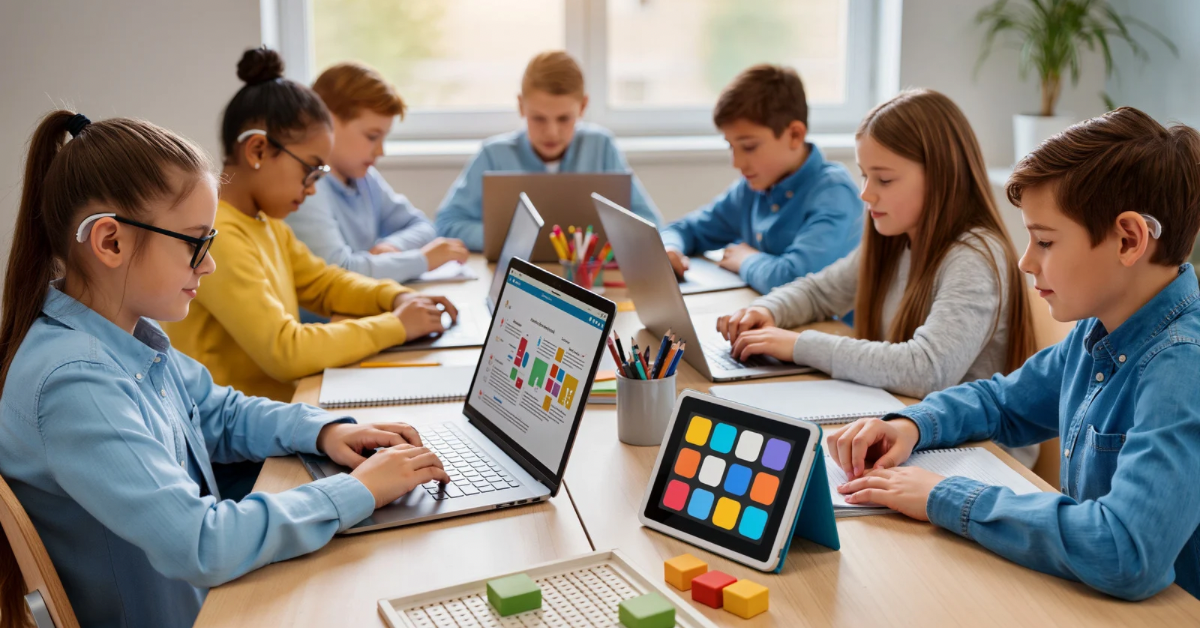
I asked ChatGPT how our children should be educated for a future where AI is freely accessible. The answer was “To prepare children for a future where AI is freely accessible and deeply embedded in daily life, education needs to shift from content memorization to capability development.” And its 'Final Thought' on an outline of a curriculum was “The best education won’t just teach children how to use AI—it will teach them how to think independently in a world where AI is everywhere.”
The extent of this technology can be frightening. How do we take its advice, and ensure that we educate our children to remain the masters of the machine, and not the other way around?
I have been privileged to work with Primary School children and their teachers for the last 20 years, since retiring from my career as a Research Scientist. This experience has convinced me that we need to provide our children with a “constructivist” approach to education. Constructivism holds that people actively build their knowledge through experiences and interactions, rather than by passively absorbing information. Leading constructivist thinkers, in addition to Maria Montessori, include Jean Piaget, Brunner and Lev Vygotsky. Volunteering in a Montessori school allowed me to learn from the teachers involved, about the differences between Montessori and my own experience of school. My conclusion is that primary school age children are capable of dramatically more learning and understanding than is expected of them by the current State education system.
Montessori [1] involves children’s active participation in the classroom. With class sizes up to 25, and a ‘director’ and an assistant, it was possible for children to be directly involved in conversations with teacher or assistant, in stark contrast to a teacher talking to a class en masse. In Montessori, we would have group discussions, usually a group of 8, where one could be confident that the whole group was participating. Being able to maintain eye contact with the whole group, made it possible to detect when a child had not grasped a point.
My second Montessori school was purpose built, with a good sized hall which also served as a dining room where the teacher shared a table with her class at lunch. It appeared to encourage good behaviour by children and created a good communal atmosphere.
A common Montessori school feature is a group of classrooms, with an open area which children from the three or four rooms around go to and carry out their individual project work. I generally worked in that common space, with a third of the class coming out of their room to work with me in turns. In these sessions we discussed Science topics and I slowly introduced the children to the computer language, Scratch. We concentrated on using Scratch to illustrate scientific ideas.
This followed the ideas of Seymour Papert [2],[3] about using the computer to understand maths and science, and not just how to use a computer. The discursive way we worked together, revealed that there was a tremendous appetite for learning about science. That could be relatively trivial, such as remembering what DNA stood for and what it meant at a fairly superficial level. But sometimes the group would take on a common challenge, such as gravity, which in one instance produced models of the planets with a bouncing ball.
It was a simple activity, but involved understanding the interaction between mass and gravitational force, as well as logical thought in structuring a computer program to animate the results
One can compare that with a typical State School experience. In parallel with my activity in a Montessori school, I started to volunteer in a State Primary School, through CSIRO’s Scientists in School, now STEM Professionals in Schools. Here the teacher followed the Curriculum, and had a plan of what topic and corresponding demonstration or hands on experimentation was to be used in that lesson.
I found I was not in a position to contribute much, partly because the youngsters were not used to a discursive approach, and partly because of the rigidity of the curriculum. There was no room for questions which arose from the idea presented in the lesson. Neither teacher nor I felt much satisfaction at the end of a lesson. Nor probably the children. One science teacher asked if we could do a session on photo electric cells. Wary of treading on toes, I asked “will it be OK to talk about photons”. “They are not mentioned until senior school!” was the reply.
In Victoria, the Science Teachers Association runs an annual ‘Science Talent Search’ and this allowed a more open format for working with the children, but there were still difficulties which seemed to arise from the lack of experience in discussing approaches to their potential entries to the competition. They did win some prizes though.
My State Primary school had a programme of ‘Electives’ where parents suggested what topics could be of interest to the children. They could run for 4 or 8 weekly one hour sessions. The children could elect which programme to attend. I did sessions on Electronics for two years running. and found that I could work in a more discursive way, and the children exhibited a higher level of interest and involvement. I wasn’t being constrained by the curriculum, which must have been a significant advantage for me over the severely constrained topics the science teacher could do. In this more open environment children were able to question, discuss and create.
There is room for much creativity in applying Montessori principles. The Montessori teacher I had worked with for around 10 years retired and I continued my volunteering with one of her colleagues. We developed a different way of working. Whereas I had previously worked alone with a group from a Montessori class, I now worked with groups of children and their teacher. She would choose a topic to be discussed and I would prepare an outline of what I intended to cover. The teacher would, in the previous week, spend a little time in preparing the ground, a scaffold on which to construct their knowledge. Then we would take a third of the class at a time, each for an hour session. We would be bombarded by questions as the children had already had their interest stimulated and were eager to learn more. In post session discussions we began to assess the success of a session by the extent and quality of the questions asked. The discussion was, within limits, allowed to follow the children’s curiosity. When my teacher partner mentioned scaffolding in the preparation of the children for the next stage, I recognised that we had incorporated the ideas of Lev Vygotski’s [4] scaffolding into our methodology.
My overall conclusion was that primary age school children are capable of dramatically more learning and understanding than is expected of them by the current State education system. What I believe we are doing in our Constructivist environment is stimulating interest and starting them on a road of self-motivated learning.
It needs to be acknowledged that I only volunteered in science and computing, and each area of learning will have its own approaches. Even with the limited number of teachers I have worked with in Montessori schools, there was a flexibility of approach, which allowed the teacher to respond to the state of development of the children. After 20 years of involvement, it is my conclusion that a Constructivist approach better serves our children.
Using a very basic model of a machine such as ChatGPT, it is possible to see two principal components: the knowledge part which is effectively remembered facts and the intelligence part which is the rules which can be can be used with knowledge collection to draw conclusions. By the way, reciting Ancient Greek poetry is a demonstration of knowledge, not an indication of intelligence, as thought by a recent UK Prime Minister.
I have seen for myself over twenty years in schools that children are capable of so much more than ordinary educational systems expect of them. That is if we don’t smother our children’s and grandchildren's urge to learn, and their creativity.
Possibly, in the past, the structure of society was fixed, and there were certain sorts of tasks which needed to be done, such as seeking out new ideas, organising and creating factories where those ideas turn into products, and a large pool of people who will work in the factories. It made a lot of sense to those at the top of such a hierarchy a century ago, but not only has the reasoning for such a hierarchy aged, but surely our aims for mankind have changed and our object of re-thinking education is not just how it fits a possible labour market, but also gives our future generations the ability to develop their intellects and be the ones to decide the future of society.
3rd generation AI is a significant advance, which I find both exciting and frightening. Frightening because I don't know how society will adapt. And that brings me back to the need for a change in our education system. What we can see is a world where there is the need to be able to think and innovate, to make use of the assistance of AI and to learn how to control it for the good of society. Not just to follow what AI tells us. An AI application may be programmed to serve interests unknown to the user This is a situation which mankind has only remotely imagined in literature. But AI is here, and is most likely to be a major factor in our near futures. There will be less reliance on stored knowledge by humans, but we will need to formulate the questions asked of these machines, and to understand and quest for new knowledge. People need to be brought up to question and think for themselves. People need to be knowledgeable, but they also need to develop the skill of questioning. Whether society gets better or worse, depends to a large extent on how effectively we educate our children to cope with this dramatically changing world.
There is a wide range of predictions for the AI age. Complete dominance by the machine, at the expense of the quality of life of humanity, is one black extreme. The polar opposite is where the machine is constrained to the role of a very fast calculating machine. From occasional use of chat GPT, it is showing capabilities which make it a useful tool. Our students need to be prepared to cope with an environment which is very different from anything which has existed before.
Peter F Raven,
November 2025
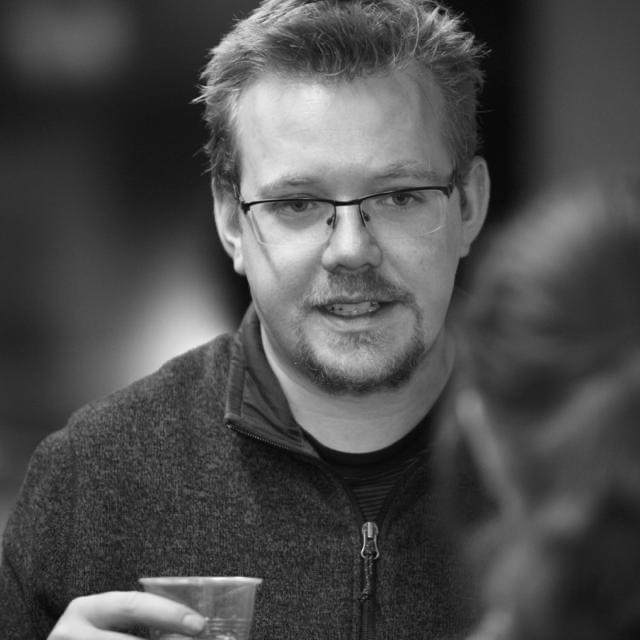
Peter Raven was born in England, where he took a degree level qualification in Electrical Engineering and went on to a career in electronics and electricity supply. This included 30 years as a research scientist, and a project to create an “Intelligent Knowledge Based System” in the mid-90s. Since coming to Australia in 2003 he has spent 20 years volunteering in primary schools, working with dedicated teachers to ignite youngsters’ interest in science, and their desire to learn.
References
[1] Lillard, Paula Polk (1997), Montessori in the Classroom. Schocken Books.
[2] Papert, Seymour (1980), Mindstorms, Children, Computers and Powerful Ideas. Prentice Hall.
[3] Papert, Seymour (1993), The Child’s Machine. Basic Books.
[4] Kozulin, A., Gindis, B., Ageyev, V. S., and Miller, S. M. (Editors) (2003), Vygotsky‘s Educational Theory in Cultural Context. Cambridge University Press.