


January 08, 2026
Nuclear Power: The health risks we’d face from radiation exposures
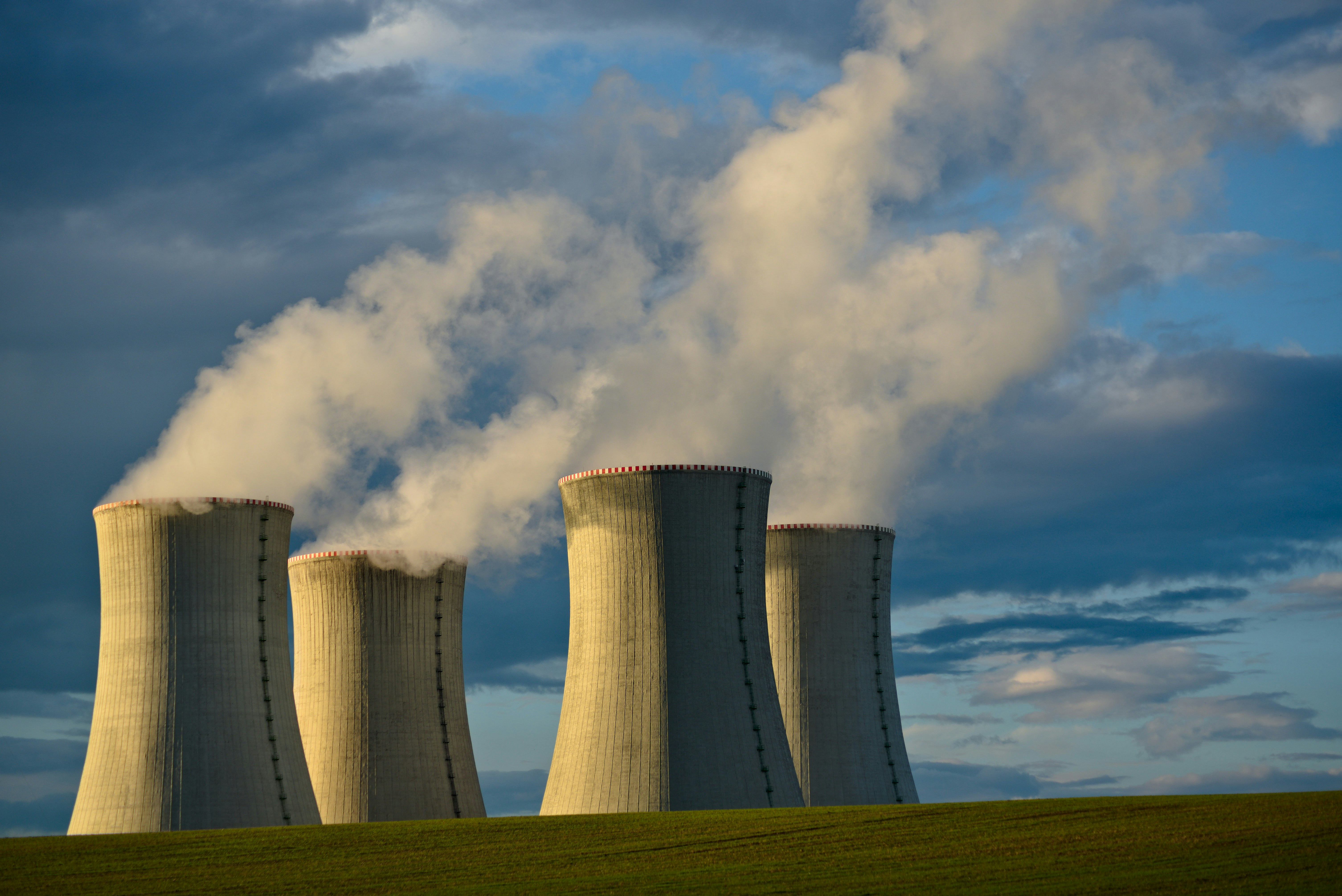
Don’t think these would just be from accidents like Harrisburg in USA, Chernobyl then in USSR now in Ukraine, or Fukushima in Japan. Nuclear power plants routinely and always will result in people being exposed to ionising radiation. So do all other stages of the nuclear fuel cycle from uranium mining , through ‘enrichment’ that increases the level of the fissile part of the uranium (in some cases to a level where it could be used for nuclear weapons); packaging this as fuel rods for nuclear reactors and running these to generate electricity for 30 or so years (and/or sometimes running them to produce even more dangerous plutonium for nuclear weapons), storing and/or ‘reprocessing’ the ‘spent’ fuel which involves keeping them under water or air-tight cooled for years before getting round to finding some as yet unproven long term deep underground storage — storage rather than disposal as the sites will need to be protected from human contact for several thousands of years at least.
Collectively and communally quite apart from accidents that have and may yet occur that have exposed large populations across continents, this routine operation of a nuclear fuel cycle will result in significant radiation exposure over time to a large number of people. Communities, particularly those down-wind from any of the mining, milling, enrichment, power/weapons, reprocessing and waste storage facilities, but even more significantly the many men and women who work within these industries who are exposed sometimes on a routine daily basis as part of their jobs.
For all of these people exposed there is a simple important message: the best scientific evidence available tells us that there is no safe level of radiation. Any exposure can be the one that causes damage at cell-tissue level that may result in cells becoming cancerous, or causing other organ damage leading to health effects, and the potential for some genetic defects that can be passed to future generations. This is a hit or miss process — technically known as ‘stochastic’ damage. Put simply but not over simply, when radiation strikes a cell in the human body one of three things can occur. The cell is killed outright. This may not be a problem as the body’s cells are dying and being replaced all the time. However, if the dose of radiation is high (as happened to nuclear weapons victims in Japan or workers in the Chernobyl accident) and many cells are affected people may experience radiation sickness, whole organs may cease to function and rapid death may result. However, often the radiation passes through the cell without causing damage or the damage caused is slight and repaired by the cell. The long-term health problem may arise when the cell is partly damaged or the repair in inadequate/incomplete and goes on to replicate, in some cases multiplying uncontrollably to show up years later as what we call a cancer.
This picture can be complicated by evidence suggesting cancer may be a two-stage process with initial damage leading to vulnerability and later damage promoting the cancer process. Radiation may be the cause of damage at either stage so people, particularly workers, exposed to other environmental health hazards may be doubly at risk is exposed to radiation as well. It can also be complicated by the type of radiation people are exposed to — broadly speaking Alpha is very intense but has a short range for penetrating the body, Beta is less intense but moderately penetrating, and Gamma which is low intensity but deeply penetrating — rather like x rays which as we know can be used to picture what is going on with bones and some organs inside our bodies. And to add a further wrinkle, the way that each of these interacts with different organs of the body can be less or more damaging. A long-lived alpha emitting radioactive particle that gets trapped in the lung, as happens from breathing radon gas in underground uranium mines (and incidentally other hard rock mines) can significantly increase the risk of lung cancer. There is also evidence for an elevated risk of heart disease and genetic damage when male testes or female ovaries are exposed. More on this later.
Assessing the level of risk — i.e. the probability of a known amount of radiation exposure to a population causing a defined number of cancers has been a challenge and a source of controversy over the many years since the actual risk of harm was recognised. Various studies on small groups of patients receiving radiation treatment for neck arthritis or scalp ringworm, or survivors of the Hiroshima and Nagasaki atom bomb blasts who received quite high radiation exposures, gave estimates that were used to set international standards for both worker and public annual but not lifetime or collective exposures. A sustained community and trade union-led campaign involving nuclear plant and other radiation exposed workers (in mining, health, industry, public science) that included UK/European, US and Canadian unions through the 1980s focused on mounting evidence that these permitted exposure limits were set way too high and needed to be brought down to a tenth of the levels operating. In the early 1990s this campaign led the international Commission on Radiological Protection to reduce the annual limit for workers (averaged over a five-year period) down to 40% of the previous level, with a similar reduction for permissible public exposures.
The numbers and the measures used for these exposure limits can be confusing so I’ll keep it simple with a focus on worker’s risks in terms of cancers (later we will look again at other health consequences). The annual limits for exposure are measured in units called Sieverts — or more commonly thousandths of these called milli-Sieverts. The old limit was set at 50 milli-Sieverts (50 mSv). The new limit in 1991 was set at 20 mSv with workers still permitted to receive 50 mSv in any year provided the average over 5 years did not exceed 20 mSv (i.e. they permitted 100 mSv in 5 years of exposure). Unfortunately, these changes fell far short of the evidence available and highlighted advocated by the unions which suggested a limit of 5 mSv a year was appropriate. Since then a major study of nuclear industry workers in Europe has shown that the cancer risks are double those used by the ICRP. In addition the European study shows these worker face a doubling of the risk of heart disease as a result of their exposure working within the current limits. In short, the evidence suggests the limit for workers should be no higher than 5 mSv a year. The same analysis suggests the public exposures need to be kept below 0.5 mSv a year.
But keep in mind these are not ‘safe’ levels below which health damage will not occur. Wherever the limit is set, this implies that there is an ‘acceptable’ level of risk that can be met if exposures are kept within these limits. A working rule of thumb advocated by Canadian authorities when confronted by the Canadian Unions campaign was to compare the acceptable radiation risk with that faced by workers in other hazardous industries. The figure suggested was that 1 death in 10,000 workers a year met this ‘acceptable risk’ criterion. Leave aside for the moment that some nuclear workers, in uranium mining for instance, were already in a recognised ‘hazardous industry’, before adding the radiation exposure risk that could have doubled their risk of death from work. I’m not aware of nuclear industry workers ever being made aware let alone agreeing to accept this as a risk from their radiation as a necessary part of their employment. But is this even close to the actual risk of death they face? The currently accepted figure for cancer death risk from radiation that is regularly cited is 4% to 5% per Sievert. How does this translate into an ‘acceptable’ risk?
Forgive the maths for a moment. The easiest way of understanding the number is to consider a workforce of 1000 people exposed at the current limit to 20 mSv a year for say a working lifetime of 40 years and ask how many of these will die from cancer as a result? Forgive the maths but the total, i.e. lifetime collective exposure of these workers would be 20 mSv x 1000 workers x 40 years = 800,000 mSv or 800 Sv . If the risk estimate is in the range of 4% to 5% per Sievert we can expect 32 to 40 of these 1000 workers to die from radiation induced cancers. This is not 1 in 10,000 a year it is around 1 in 1000 a year — a risk ten times greater than the so called ‘acceptable’ risk benchmark. Looked at in terms of a lifetime risk for one of the 1000 workers exposed at this limit the cumulative exposure would be 800 mSv. Their exposure would increase their risk of dying from radiation induced cancer by 4%.
Now this is, hopefully, a worst-case scenario — annual exposure to the permitted limit. Radiation protection in the real world requires that exposures be kept below the limit — in fact ‘as low as reasonably achievable’. So, if we reasonably expect workers to be exposed below this limit both in any given year and over a lifetime, let’s look at actual exposures experienced by at least a significant part of the nuclear workforce. The evidence suggests that: uranium miners, some of the more directly exposed nuclear power and reprocessing workforce and workers in the proposed nuclear waste management industry can routinely expect an annual average exposure figure of around 1 — 5 mSv a year — one twentieth to a quarter of the upper limit. If we also consider a working lifetime exposure limited to, say, 20 rather than 40 years’ work in high exposure areas, the cumulative exposure of a workforce of 1000 — again excuse the maths — falls into the range of becomes 1 — 5 mSv x 1000 workers x 20 years = 20,000 to 100,000 mSv or 20 to 100 Sv. If we accept the latest evidence on cancer risk from the European workers study workers can expect an increase in fatal cancers at 8 — 10 % per Sievert. For our group of 1000 workers this translates to a probability that between 2 and 10 workers will die of radiation induced cancers in their 20-year radiation-exposed working lifetime.
Now add to this the evidence of doubling the risk of heart disease in European Nuclear workers and add on the risk of genetic damage being passed to children — a level of risk still much contested but accepted as an additional risk to people exposed. Consider not just workers who, arguably, might accept these risks as the price to be paid for their employment, but the much larger wider population who will be, often unwittingly, exposed and we have an inevitable and potentially considerable collective and cumulative exposure with unavoidable health risks from radiation exposure from the nuclear industry. As indicated above, despite regulations exposing limits on these exposures the risks may be unacceptable for many of workers in the industry — and by extension so may be the risks from radiation exposure of the public.
To put it bluntly — would you accept a job in the industry when you could be permitted to face a 1 to 4% risk of dying from radiation induced cancer with a likelihood that, even with best practices operating to keep your exposure as low as reasonably achievable, your increased cancer risk could still be of the order of 1-4% higher than you might expect? If so it might be a good idea to have this acknowledged in your employment contract — that way it might make it easier to claim compensation if the worst occurs and you do contract cancer perhaps 20 years after the exposure.
These risks to worker and public health need to be weighed in the debate about whether we should consider expanding our involvement in the nuclear industries as part of our attempt to manage the existential climate change crisis by replacing our reliance on coal oil and gas with nuclear power plants. They also weigh heavily on the decision to base much of our future defence on an as yet undeveloped capacity to manage nuclear powered submarines — the proposed US/UK (AUKUS) alliance version of which will be based on highly enriched, i.e. weapons grade nuclear fuel.
But the lack of appreciation of the true scale of risk from low-level radiation exposure has significant consequences outside of the nuclear industry. Back in the 1990s diagnostic radiology, use of x-rays taken to investigate possible health problems, was making a significant contribution to the collective annual radiation exposure of the population. Since then, even though modern equipment delivers lower doses per scan, the number of scans has increased and as a result the collective exposure to the populations from this diagnostic radiation exposure has risen by a factor of five. Using the estimates of the risk outlined above suggests that in a country the size of Australia we are likely causing between 2000 and 4000 radiation-induced cancers a year — all of which will of course be ‘invisible’ and unattributable to radiation within the overall cancer rates. This is not to suggest that all or even many of these X-rays are unnecessary but some are, and are undertaken in a context where many of the medical staff authorising them and radiographers administering them are unaware of the scale of the potential collective risk. Even though the risk to the individual from a single procedure may be small and outweighed by the benefits, It can be useful to ask physicians a series of questions before agreeing to the procedures including: What will the x-ray show that you don’t know already? What will you do differently as a result of having this x-ray? What measures will you ensure are used to reduce unnecessary exposure and exposure from scatter outside the target x-ray photo zone? It is disturbing that many radiographers do not routinely offer shielding — for example to protect neck/thyroid and gonad/pelvic areas when taking chest x-rays. And for those who dismiss concerns using the argument that the risk from an individual scan is small and “we’ll just take one to be on the safe side” it can be useful to point out that the physician or radiographer is usually ‘on the safe side’ — behind a screen — the patient is not and the health effects from radiation are stochastic / hit-and-miss at the level of cell damage — to be avoided unless necessary.
Raising awareness of the evidence for health risks from radiation is key to improving health of workers and the public, and changing cultural attitudes, as well as countering the facile and misleading arguments of those who would offer nuclear power as a solution to the carbon-polluting climate energy crisis.


