


July 12, 2026
Social Democracy Without Social Connection?
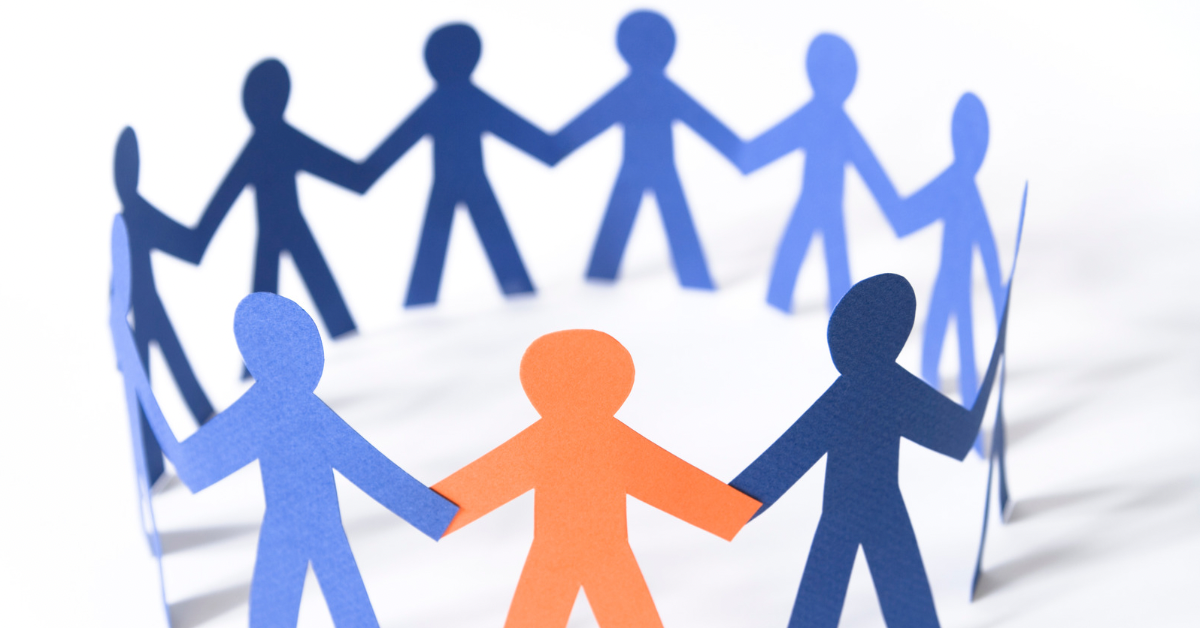
There is a crisis of disconnection in our public life. We have more ways of reaching one another than any generation before us, yet less confidence that we are part of a common conversation. We broadcast. We sort ourselves. We are measured as consumers, organised as workers and approached as voters. But we increasingly struggle to recognise the society these fragments are meant to compose. This is not to say that Australia has simply fallen apart. Social connection here has shown real resilience under pressure. But resilience should not be mistaken for the absence of strain. Too much of our politics now feels distant, transactional and angry. Social democracy cannot be content with distributing the products of an economy more fairly. It must also rebuild a society in which people feel that they belong, that they are heard and that the future is something they have a part in making.
Disconnection does not mean that people have simply stopped caring for one another. Most of us know, in the lives closest to us, that we depend on other people. We are raised by them. We fall ill and need them. We love people who, one day, may need our care. Yet much of our public life tells a different story: a successful adult stands alone, manages alone and asks little of others. That story is not only harsh. It is untrue. It makes dependence seem like failure and care like a private burden, rather than part of the life we share.
In my work as a doctor in neurology, I meet people at the point where an apparently independent life can change in an afternoon. Imagine a woman in her late forties. She works in payroll, raises children, worries about bills, rings her mother on the drive to work and dreams of an upcoming holiday. Her life is her own, but it is lived with other people. One afternoon, she has a stroke. Perhaps language goes first. Within hours, a person who had been speaking for herself is surrounded by others answering questions and explaining what she would want. Much of this is necessary; some of it is deeply loving. But the change is profound. She is still present, yet her place in the conversation has become uncertain.
Her illness does not turn an independent person into someone newly dependent on others. It reveals a dependence that was there all along. The philosopher Alasdair MacIntyre calls us “dependent rational animals.” We may grow into independence, but none of us gets there alone. Like every one of us, she began life unable to speak, walk or understand the world without the attention of other people. She learnt language from those around her. She grew into independence through family, education, friendship and the social world that supported her. Before her stroke, her autonomy was real. But it was never entirely her own achievement, and it was never permanently secure. This is not a special condition reserved for the sick, the disabled or the old. It is part of being human, though some of us are allowed to forget it for longer than others.
Before her stroke, she fitted the picture of adulthood our society most readily recognises: working, capable, apparently self-sufficient. Afterwards, she may be described with different words: rehabilitation, support needs, lost income, public cost. Those words matter. Without them, there is no planning and no provision. But they tell us what her illness requires; not what her life is worth. A society that forgets that difference begins by measuring need and ends by mistaking a person for a burden.
This mind set is often traced back to Margaret Thatcher’s claim that there was “no such thing as society”. This is often taken to mean that she believed we owe nothing to one another. That is not quite what she said. She described life as “a reciprocal business” and spoke of duties to family and neighbours. She was right that responsibility cannot always be handed upwards and forgotten. But she still located that responsibility primarily in private individuals and families. This is where I differ. There are obligations we meet personally, in the ordinary acts of love and care that make life possible. There are also obligations we meet together, through the institutions we fund, shape and entrust with the care of people we may never know.
A market economy and a market society are different. Markets allow people to exchange, create, invest and build prosperity. A successfully functioning economy without markets has never endured. But the market answers a limited set of questions. It is good at registering price, demand and exchange. It is much less able to tell us what dignity requires, what care means, or why a person still matters when they can no longer produce or purchase as before. Public institutions therefore cannot be judged only as if they were market transactions. A hospital must know its costs, but it does not exist to produce the cheapest possible episode of care. A school must prepare people for work, but it does not exist only to manufacture employable units. A democracy must listen to what people want, but it does not exist only to market policies back to segmented groups of voters. The mistake of recent decades was not that we used markets. It was that we began to treat market language as though it could answer questions it was never built to ask.
In recent decades, social democracy has too often argued in a language already set by the market. It has debated how opportunity should be distributed, how services should be funded and how hardship should be relieved. These questions matter. But they do not tell us what kind of society those policies are meant to create. Social democracy cannot be only the kinder management of an atomised life. It must recover a positive purpose: to build a society in which people are more than economic actors, and in which public institutions sustain belonging as well as material life.
Social democracy must also be willing to speak about freedom. The individualist version of freedom asks us to need as little as possible from other people or from the institutions we share. But freedom is not the achievement of standing alone. It is the possibility of living a life of one’s own, with the security and support needed to remain an agent within it when circumstances change. This does not require us to live alike or agree about everything. It requires a common commitment that no person is made disposable because they are vulnerable, dependent or because their life no longer fits the model our society finds easiest to reward.
For the woman after her stroke, this becomes immediate. She may need months of rehabilitation and financial security while her life is disrupted. Her family may also need support as they adjust to a life changed by her illness. She may return to work; she may not. Her future cannot be measured only by that question. Material support matters, but inclusion also means retaining a voice. In hospital, I have seen how easily a patient whose words have slowed can be spoken over. Plans are made in her presence. Questions are redirected to someone who can answer more quickly. A person can be supported and still be made absent. The principle reaches beyond medicine: people affected by decisions should remain, as far as possible, participants in them.
That principle matters in democratic life as well. Citizens are consulted, categorised, represented and targeted, while decisions remain remote from the lives they shape. Representation remains essential. So do expertise, independent institutions and rights that cannot be placed at the mercy of every passing majority. But democracy requires more than competent government delivered from above. It requires that citizens have meaningful ways to take part in reasoning about the future they will share. Voice is not the guarantee that each of us gets our way. It is the assurance that public life is something we help to form, rather than something that simply happens around us.
When people no longer feel that public life belongs to them, politics built on blame finds easier ground. It offers a simple explanation for lives that feel less secure: someone else has taken what should have been yours. It offers an equally simple answer: you can regain control by pushing that person out. This is not the whole explanation for resentment or exclusionary politics, and anger may be a response to real injustice. But belonging built by making someone else the enemy is not a repair of disconnection. It is an exploitation of it. A democracy cannot answer that by speaking more loudly from above. It must offer people a more serious way to belong.
Digital platforms have often intensified this disconnection. Much of the online world is designed to retain attention by sharpening difference into conflict, to reward speed, anger and humiliation. But digital tools can also widen democratic life: making evidence easier to access, opening participation to more people and helping citizens deliberate about public questions before positions harden into slogans. That promise only matters if institutions of power are willing to listen and respond.
Representative democracy remains essential, but it should not ask citizens to be spectators between elections. If people are to feel that public life belongs to them, they need genuine opportunities to debate difficult questions before decisions have hardened around them. Citizens’ assemblies, deliberative forums and more meaningful consultation do not replace elections, representatives or expertise. But they give citizens a more serious part in public judgement between elections. There are already models for this: the OECD has tracked more than 700 representative deliberative processes across 28 OECD countries, involving ordinary citizens in learning, deliberating and making recommendations on public questions. Designed well, such processes can help restore the connection between citizens and decisions made in their name. The tools that too often keep us speaking past one another could also help us listen again.
The woman with whom we began may recover much of the life she knew, or she may live the rest of it differently. Either way, she is still one of us. She does not have to justify herself through productivity, fluent speech or independence before she deserves a place in the world we share. And in our democratic life, no citizen’s voice should have to become loud, angry or easily marketable before it deserves to be heard.
A social democracy for an age of disconnection must begin with a clearer account of who we are. Our independence matters, but none of us achieves it alone or keeps it forever. We need one another, and we need a voice in the society we share. An economy should serve human lives. Public institutions should remain faithful to the people they exist to serve. Democracy should give citizens a genuine part in shaping their common future. We will not repair a divided public life by asking people to retreat further into themselves. The task is to build a society that can hear its people again: less distant, less easily divided and confident enough to understand that our dependence on one another is not a weakness to overcome. That is where a shared future begins.
Patrick McMullan, June 2026
Patrick McMullan is a neurology doctor and academic clinician at the University of Sydney, working across neurodegeneration, delirium, sleep and cognition. He is also training in psychodynamic psychotherapy, and writes about illness, care and the relational foundations of social democracy.


