


August 23, 2026
Media Inequality, News and Framing
“A genuinely rewarding and provocative evening.” - Duncan Bainbridge, SA Fabian Co-Convenor
Dr Victoria Fielding on “MEDIA INEQUALITY: News Framing and Media Power”, The Kentish, North Adelaide, 20 August 2026
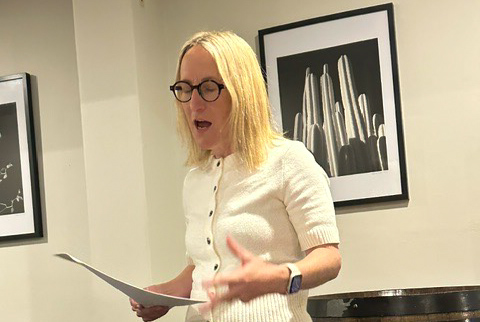
Dr Victoria Fielding delivered a genuinely thought-provoking talk that pushed the audience well beyond the usual, tired arguments about media bias. Rather than getting stuck into the familiar debate over whether particular Murdoch press stories were true or false, she offered something far more valuable: a framework for understanding how political narratives take hold in a democracy.
Her core insight was sharp. Misinformation isn't just a matter of isolated lies or errors; it emerges from an entire ecosystem of political parties, media outlets, commentators and supporters who reinforce the same frames, sometimes deliberately and sometimes simply because they share assumptions and interests.
The point that misinformation can determine not just what people believe but what they believe is worth thinking and worrying about is striking, and it reframes the stakes of the whole discussion. Dr Fielding provided a more sophisticated and useful way to think about the problem than counting individual falsehoods, because it explained how public discourse can be shaped and narrowed even when nobody is technically lying.
Dr Fielding spoke about her research on "conservative advocacy journalism," including her analysis of News Corp Australia's coverage of the 2023 Voice referendum, which gave the talk real empirical grounding rather than leaving it as abstract theory. It's clear she's done her homework!
Her conclusion that the coverage functioned as advocacy rather than neutral reporting is a serious, evidence-based claim, not a throwaway line.
What is particularly commendable is that Dr Fielding exercised necessary intellectual caution; she meticulously distinguished between showing that an organisation regularly supports a political perspective, something careful analysis can establish, and alleging deliberate, coordinated propaganda, which is a far more substantial claim that demands much stronger evidence.
That kind of rigorous self-awareness is exactly what makes her argument credible rather than just another partisan broadside. She's not interested in scoring points; she's just focused on getting the analysis right.
The evening's greatest strength was the reframing itself: shifting attention from individual stories to the architecture of political communication, in which agenda-setting, framing, repetition, and amplification across supposedly independent outlets can shape a society's sense of what matters, even without a single false claim.
That's a bigger, more important democratic question than the culture-war shorthand usually permits, and Victoria Fielding deserves real credit for steering the conversation in that direction.
Ultimately, this talk modelled exactly the kind of thinking it argued for: careful, systemic, evidence-based, and asking not just "was this true?" but "who gets to shape the stories a society tells itself?"
Dr Fielding's book 'Media Inequality: News Framing and Media Power' is available for purchase online here.


